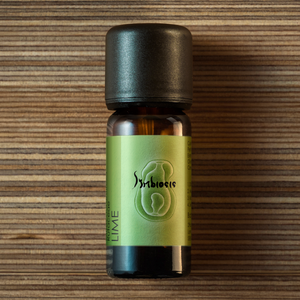


Ginger | Zingiber officinalis 10mL
£13.50
Size: 10mL
Country of origin: CHINA
Botanical family: ZINGIBERACEAE
Extracted from: RHIZOME
Extration method: STEAM DISTILLATION
Note: MIDDLE
Blends well with:
Lemon: Brightens the citrus thread already in ginger's opening, the two oils meeting at their shared citral territory to produce something cleaner and more immediately energising. A kitchen or workspace on a winter morning. → Productivity
Black Pepper: Sharpens the spiced warmth into something drier and more contained, the two oils reinforcing each other's directional quality while the pepper's dryness prevents the ginger from accumulating too much heat. → Stimulation
Frankincense: Grounds the forward momentum into something slower and more considered, the resinous dry quality of the frankincense giving the blend a base that ginger alone does not sustain. A workspace where activation and focus are both required. → Productivity
Cinnamon Leaf: Warms the blend into something more lateral and gathering, the cinnamon's eugenol spreading the ginger's directional heat into the full volume of the room. A kitchen before a winter gathering. → Kinship
Orange sweet: Lifts the warm-spiced quality into something more openly festive, the citrus sweetness softening the ginger's forward edge without losing its warmth. An entrance hall or living room in cold weather. → Kinship
Shelf life: Keep in a cool, dark place in a tightly sealed amber or black bottle. Best used within 2-3 years.
Precautions: Dilute before skin application. Avoid during pregnancy and while breastfeeding. Not for internal use.
The opening is bright before it is warm: a citrus-adjacent freshness, geranial and neral giving it a lemon thread that lasts only until the building spice overtakes it. The heat arrives gradually rather than immediately, the characteristic quality of fresh rhizome rather than dried powder. As the heart develops, a green-earthy quality enters, the smell of the root with soil still attached, fibrous and alive, nothing like the kitchen jar. The dry-down is quiet and woody, the zingiberene base settling into something drier and more grounded, the brightness largely resolved. Black pepper takes the spiced-warm family and keeps it dry and contained throughout; ginger builds its heat directionally, forward momentum rather than enveloping warmth, the citrus opening making room for something that arrives after it.
Ginger is the person who sees what needs doing and does it without waiting for conditions to improve. The energy is not aggressive; it is simply running in a direction and expecting the room to accommodate that. There is a decisiveness that can read as abrupt if you arrived expecting negotiation: they do not ease into things, they begin them. Generous with their energy and genuinely interested in pulling others along, but with limited patience for the delay that dithering requires. You leave their company either ready to act on something you had been circling for weeks, or faintly exhausted because you were not prepared for that level of forward momentum.
Colour:
The colour is warm golden-yellow at the surface, the colour of fresh ginger root's flesh just after the skin is removed, bright but not pure, with earthy amber undertones that suggest what the brightness is sitting on top of. The green of the heart register is a shadow rather than a presence: the colour of the root's fibrous interior where the flesh meets the outer layer, visible only when you look for it. Nothing here is cool; the palette is warm throughout, but the warmth is earned rather than applied.
Texture:
In the air it has the quality of warmth that builds from the inside outward: not a surface sensation but a penetrating one, registering in the chest and the sinuses before it registers at the skin. The citrus opening has a slight brightness that is almost effervescent, and then the spice arrives underneath it with more weight and directional pressure. There is no softness here, no velvety give; the texture is about activation and forward movement rather than presence and accumulation.
Architecture:
The plan is oriented toward use: a single volume organised around the generation and retention of heat, the structure in timber or stone chosen for its capacity to absorb warmth and release it slowly into the body of the room. Platforms or benches at different heights create zones of varying intensity, the architecture giving the body a choice of exposure rather than a single condition. Windows are small and positioned for ventilation without cooling, the aperture strategy about managing what leaves rather than what enters. The body moves into the space, feels the heat register in the chest before the skin, chooses a level, settles. The threshold is deliberate: outside is cool, inside is warm, and the change is immediate. Ginger runs as a dry warming current through the full volume of this room, the directional charge the plan holds between floor level and the body's breathing height, where the heat and the scent are the same material.
Interior:
Bare timber benches worn smooth from heat and repeated use, the surface carrying no finish beyond what the wood itself has become: darkened at the grain, slightly rough at the edges, the centre of each plank concave from long contact with bodies. Wooden buckets and ladles on simple hooks. Stone or tile underfoot, the surface slightly uneven where the drainage runs. A single dim light source, functional rather than atmospheric. The hand rests on the bench, feels the warmth in the timber, the slight roughness of grain opened by repeated cycles of heat and steam. Nothing in the room is placed for appearance; everything is placed for use, and the use is physical. The scent gives the space its quality of purposeful activation, the dry spiced warmth that rises from the timber when bodies bring their heat to it.
Sound:
Water hitting hot stone and hissing immediately into steam: a brief, sharp sound that resolves into the sustained hiss of vapour, the acoustic live and slightly percussive in the hard-surfaced room. Underneath, the creak of timber expanding in heat, the sound of a structure responding to what it is being asked to hold. Where fennel sweet is the irregular simmer of a pot being maintained, ginger is the hiss of water meeting something hotter than it expected, the sound of activation rather than continuity.
Stimulation:
Ginger's stimulation is physical before it is mental. In a home workspace, a bathroom used for morning routines, or any room where inertia has settled, the scent raises the body's readiness without demanding a specific direction for it. The building warmth of the rhizome, the forward momentum of its character, makes sitting still feel less appropriate than it did before the scent entered the room. This is not the stimulation of curiosity and delight; it is the stimulation of the body remembering it is capable of more than its current position.
Productivity:
Ginger's contribution to Productivity is not mental clarity but physical readiness. The resistance that precedes starting a task is often physical as much as psychological: the body not warm enough, not awake enough, not sufficiently committed to its own aliveness to begin. A workspace with ginger in the air in the morning addresses that resistance at its source, warming the body toward the work before the work has been asked of it.
Remarks: The information provided on this website is for educational purposes only and may not be entirely accurate or complete. It is not intended to diagnose, treat, cure, or prevent any disease. Please note that the photos of the plants are intended to represent the typical appearance of each plant, but may vary based on location, growing conditions, and time of year. We recommend consulting with a healthcare professional before using any essential oils if you are pregnant or breastfeeding, or have any underlying health issues.