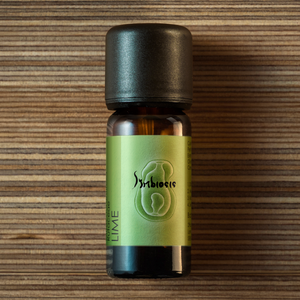


Lemon | Citrus limonum 10mL
£8.00
Size: 10mL
Country of origin: ITALTY
Botanical family: RUTACEAE
Extracted from: FRUIT PEELS
Extration method: COLD PRESSED
Note: TOP
Blends well with:
Rosemary: Sharpens the clean top into something more directional and mentally focused, the camphoraceous quality of rosemary aligning with lemon's clarity to produce a blend suited to a workspace where the morning requires immediate engagement. → Productivity
Eucalyptus Radiata: Amplifies the clarifying quality, the cineole adding an airway-opening brightness that extends the lemon's brief top into something with more sustained presence in the room. A bathroom or a workspace where the air needs clearing. → Productivity
Frankincense: Grounds the volatile brightness into something with structural weight, the resinous dry quality of the frankincense giving the blend a base that lemon entirely lacks, making it suitable for a workspace that needs both clarity and stillness. → Productivity
Peppermint: Cools the citrus brightness into something more directional and precise, the menthol adding a clean cold edge that extends the blend's clarifying quality well past lemon's natural dissipation. → Stimulation
Juniperberry: Deepens the clean-green register into something more resinous and considered, the two oils meeting at their shared quality of honest, functional clarity without sentiment. A room being reset after something finished. → Storage
Shelf life: Keep in a cool, dark place in a tightly sealed amber or black bottle. Best used within 12 to 18 months; citrus oils oxidise faster than most and lose their top-note brightness relatively quickly.
Precautions: For diffusion use or very dilute skin application only; use at 2 percent maximum and avoid sun or UV exposure for 12 hours after application due to photosensitising furanocoumarins. Avoid during pregnancy and while breastfeeding. Not for internal use.
The opening is tart and immediate: the spray of zest rather than the sweetness of juice, green and bright, the beta-pinene adding a slightly piney freshness that keeps it from being purely citrus. The citral gives it its specific lemon quality, the tartness that is immediately recognisable and immediately over, the scent moving through the air rather than settling in it. A brief floral softness enters in the heart, neroli-adjacent but lighter, before the scent clears into a neutral dry-down that leaves the air simply cleaner than it was. Grapefruit takes the limonene family and adds nootkatone's bitter complexity; sweet orange warms it toward comfort; bergamot takes it toward floral-tea depth. Lemon does none of these things. It arrives, clarifies, and leaves, which is its specific quality and the thing no other citrus oil in the range provides.
Lemon is the person who sees the obvious solution and is genuinely puzzled that you have not acted on it yet. The practicality is not unkind; they simply believe that most situations improve with basic organisation, fresh air, and direct address rather than with additional analysis. They are the friend who helps you clean when you are overwhelmed, who suggests the straightforward thing you have been too close to see, who is less interested in the feelings about the problem than in what you are going to do about it. Conversation with them is efficient and action-oriented. You leave feeling either refreshed and clear about the next step, or faintly dismissed if what you needed was someone to stay in the problem with you for a little longer.
Color: The colour is bright yellow with white undertones, the colour of lemon zest in direct sunlight: not the warm amber of orange or the complex pink-yellow of grapefruit, but a clean, high-key yellow that belongs to surfaces reflecting light rather than absorbing it. There is a white brightness at the edge, the colour of early morning light on a pale wall, and a very faint green in the beta-pinene opening, the colour of the peel's outermost layer before the yellow fully saturates. The palette is transparent throughout; nothing here is warm or accumulated.
Texture: In the air it has the cool spray of citrus mist on the face: brief, sharp, registering at the surface rather than penetrating. The tartness of citral adds a slight sting, the way lemon juice makes itself known on a small cut, a contact that is over before it becomes discomfort. There is no weight, no density, no accumulation; the texture is about the moment of clarifying contact and the clean air that follows it. The dry-down has no texture at all, which is itself a quality: the scent leaves the air as it found it, minus whatever staleness it cleared.
Architecture: The plan is open and outdoor-adjacent: wide doorways and deep window openings that connect the work surface inside to the courtyard outside, the boundary between the two spaces a change of surface rather than a change of enclosure. Walls are white-rendered or pale stucco, the surfaces chosen to reflect light into every corner of the plan rather than to absorb it. The floor is terracotta or pale stone tile, easy to clean, carrying no warmth. Cross-ventilation is the organising principle of the plan: apertures positioned on opposite sides so that air moves through rather than settling. The body moves between inside and outside without pausing at the threshold, the indoor and outdoor air briefly the same. Lemon runs as a bright tart current through the full cross-section of this space at the aperture line, the scent the plan holds at the point where outside light and inside work meet, already dissipating as the air moves through.
Interiors: Open shelving with everyday ceramics and glass storage jars, the surfaces clean and spare, nothing stored that is not in regular use. A wooden worktop, scrubbed pale from repeated cleaning, the grain raised slightly by years of water contact. A copper or ceramic bowl holding lemons, the fruit itself present and visible rather than stored away. Minimal fabric: a single cloth folded over a rail, cotton rather than linen, practical rather than decorative. The hand wipes a surface down, wrings out the cloth, hangs it back. Nothing in the room requires decision about whether to keep it; everything that is here is here because it is used. The scent gives the room its quality of functional readiness, the bright tart charge along the work surface that makes the act of cleaning feel like the most natural thing the space could ask for.
Sound: The slice of a knife through citrus on a pale wooden board, clean and immediate, the sound over before the knife reaches the surface beneath. Then the brief sound of juice on a ceramic bowl. The acoustic is hard and live, tile and plaster and open air, the sounds moving quickly and clearly without resonance. Where jasmine is the fountain running all evening, lemon is the knife: a single clean action, already complete, the surface ready for the next one.
Productivity
Lemon in a workspace or a kitchen makes the baseline of order feel more achievable. The scent does not create focus; it removes the specific quality of staleness and visual-olfactory clutter that makes starting feel harder than continuing. A desk cleared and wiped down, a kitchen reset after cooking: these are the spaces where lemon does its most specific work, by making the air match the cleared surface rather than carrying the residue of what was there before. Physical order and olfactory order arrive together, and the capacity to think clearly follows both.
Storage
Lemon's Storage register is the least sentimental version of the aspect: the maintenance of what is kept rather than the preservation of what matters. In a utility room, a cleaning cupboard, or any space where the work of maintaining the home is done, the scent makes that work feel purposeful rather than merely necessary. It does not make keeping things feel meaningful; it makes keeping things in order feel like the right and obvious relationship to what is stored.
Remarks: The information provided on this website is for educational purposes only and may not be entirely accurate or complete. It is not intended to diagnose, treat, cure, or prevent any disease. Please note that the photos of the plants are intended to represent the typical appearance of each plant, but may vary based on location, growing conditions, and time of year. We recommend consulting with a healthcare professional before using any essential oils if you are pregnant or breastfeeding, or have any underlying health issues.