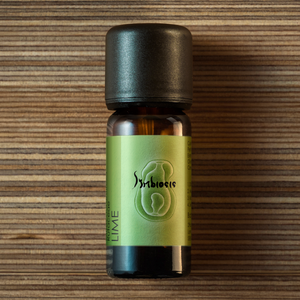



Nutmeg | Myristica fragrans 10mL
£12.50
Size: 10mL
Country of origin: INDONESIA
Botanical family: MYRISTICACEAE
Extracted from: SEEDS
Extration method: STEAM DISTILLATION
Note: MIDDLE
Blends well with:
Orange sweet — Brightens the warm-spiced opening into something more immediately festive, the citrus lifting the resinous depth into a register that reads as celebration rather than indulgence. A kitchen or dining room before a winter gathering. → Kinship
Clove Bud —Amplifies the eugenol warmth, deepening the blend into something denser and more overtly spiced; the nutmeg's resinous complexity preventing the clove from becoming simply medicinal. A dining room in deep winter. → Kinship
Frankincense — Grounds the resinous base into something cooler and more deliberate, the frankincense's dry powder meeting nutmeg's warm wood at a point where the blend becomes more considered than either achieves alone. → Intimacy
Sandalwood — Warms the dry-down into something creamier and more sustained, the two oils meeting at their shared quality of woody warmth that deepens rather than dissipates over time. A sitting room after dinner. → Intimacy
Cardamom — Lifts the heavy resinous quality into something more aromatic and complex, the eucalyptus-bright quality of cardamom giving the nutmeg room to breathe without lightening it fundamentally. → Stimulation
Shelf life: Keep in a cool, dark place in a tightly sealed amber or black bottle. 2-3 years
Precautions: Dilute before skin application; use at 0.5 percent maximum. The myristicin content makes this oil toxic in large doses; the concentration limits are not advisory. Avoid during pregnancy and while breastfeeding. Avoid with liver conditions. Not for internal use.
The opening is immediately warm and sweet-spicy: sabinene's peppery kick arriving before the resinous depth has time to develop, the pinene brightness giving it a brief freshness that the heart quickly takes into something denser. A burnt-sugar quality enters as the heart deepens, and with it a faint camphoraceous flash, unexpected in a spice oil, that gives the warmth an edge it would otherwise lack. The dry-down is the heaviest register in the spice group: woody-sweet, bitter underneath, the myristicin weight settling into something that stays in the room long after lighter top notes have cleared. Cinnamon leaf takes the warm-spiced family and keeps it green and airy; clove bud takes it into darkness and density; nutmeg takes the same family into a woody, resinous, slightly narcotic register that neither of the others reaches. It smells like a wooden drawer that has held spices for decades, the wood itself having absorbed the aromatic memory of everything it once contained.
Nutmeg is the person who knows exactly how much a situation requires without making a performance of knowing. The authority is quiet and comes from having thought things through rather than from any need to be seen to have thought things through. There is warmth in them, but it is selective rather than indiscriminate: they choose depth over breadth in how they direct their energy, and the people they direct it toward feel the difference. They are the friend who can turn an ordinary evening into something memorable simply by being present and knowing what matters, who has old-fashioned competence in the things that make a space and an evening feel worth the effort: food made from scratch, materials chosen for quality, hospitality without anxiety. Time with them is comfortable and slightly intoxicating, the combination that makes an evening tip from pleasant into something worth remembering.
Colour:
The colour is deep russet-brown with amber lights, the colour of polished mahogany or strong black tea with honey: not the sharp terracotta of cinnamon leaf or the dark burgundy of clove bud, but a warmer, more amber-inflected brown that carries the quality of things that have been oiled and polished and used for a long time. There is a burnt orange in the opening, fading toward cinnamon as the heart develops, and a golden-brown in the dry-down, the colour of autumn leaves still on the branch rather than fallen and drying. The palette is warm throughout and consistently darker than the opening suggests it will be.
Texture:
In the air it has the grain of close-grained hardwood, dense and slightly oily: smooth when approached directly but with enough resistance to feel substantial rather than simply present. The sabinene opening has a dry peppery quality, the texture of freshly ground spice between the fingers, and then the resinous heart adds a tackiness, the texture of tree resin on the fingertip, warm and reluctant to release. The dry-down has the texture of velvet that has been crushed and re-smoothed, holding the warmth of a hand.
Architecture:
The plan is timber-framed and thick-walled: wide-plank floors that carry the darkening of age and constant use, the boards slightly uneven where they have moved with the building over many decades. Small-paned windows with wavy glass filter rather than transmit light, the interior always slightly dimmer and warmer than the outside. Exposed ceiling beams, their undersides darkened by the proximity of warmth and human breath over many years. A brick hearth on one wall, the surround stained with the residue of fires maintained through many winters. The body enters through a heavy door, feels the temperature and the air quality change, moves toward the light from the window. The room does not open to the garden; it is deliberately interior, its relationship to the outside world mediated by the thickness of its walls. Nutmeg runs as a warm resinous current through the middle volume of this space, a band the plan holds at the height of the worktop and the shelf, where the accumulated aromatic memory of the wood and the spices stored in it are indistinguishable from each other.
Interior:
Wooden drawers and compartments for different grades and varieties, the wood of each drawer darkened at the handle where hands have pulled it open thousands of times, the interior carrying the accumulated scent of what it once held even when empty. Ceramic apothecary jars on open shelving, their labels hand-lettered, the contents visible through the glass. A set of brass scales on the central table, their weights arranged by size in a fitted case. The thick ledger, its leather binding worn at the spine, open at the current page. The hand reaches into a drawer, feels the smoothness of the worn wood at the base, closes it again. The patina here is entirely of commerce and accumulated expertise: the table surface carrying the ring of the scale, the slight indentation where the pen has pressed through many pages, the warmth of wood that has been in a heated room for so long it holds the temperature even when the fire is out. The scent gives the room its quality of inhabited competence, the warm resinous current that rises from the wood and the old spice residue together, making the space feel like it knows what it is for.
Sound:
The deep resonance of a wooden spoon stirring in a heavy pot, a sound felt as much as heard, the acoustic of a room where the materials are dense enough to catch and return sound rather than simply absorbing it. Underneath, the creak of old floorboards as someone moves through an adjacent room, and the distant low murmur of conversation that has been going on for a while and is in no hurry to conclude. Where clove bud is the sound of a drawer being pulled open with deliberate resistance, nutmeg is the sound of the room after the drawer has been closed and the conversation has continued: settled, warm, unhurried.
Kinship
Nutmeg in a kitchen or a dining room makes gathering feel like it has been thought through without being over-planned. The warm resinous quality, the sense of a space that has accumulated the evidence of serious and repeated use, signals that what happens here is worth the preparation it receives. The Kinship this enables is the version that comes with competence: people gather in this room because they know something good will happen here, not because the occasion has been arranged but because the space and the person in it know how to make an evening feel worth the effort.
Intimacy
Nutmeg's Intimacy is sensuous rather than tender. In a dining room used for meals that linger, or a sitting room after the meal has ended, the resinous warmth and the slight narcotic weight of the dry-down create a quality of physical ease and aesthetic attention: the recognition that comfort and pleasure and the careful feeding of the senses are forms of care worth practicing. This is not the vulnerability of Intimacy in the German chamomile register; it is the register of being sufficiently at ease with another person to share the pleasure of a well-made evening without needing it to mean anything more than it is.
Remarks: The information provided on this website is for educational purposes only and may not be entirely accurate or complete. It is not intended to diagnose, treat, cure, or prevent any disease. Please note that the photos of the plants are intended to represent the typical appearance of each plant, but may vary based on location, growing conditions, and time of year. We recommend consulting with a healthcare professional before using any essential oils if you are pregnant or breastfeeding, or have any underlying health issues.