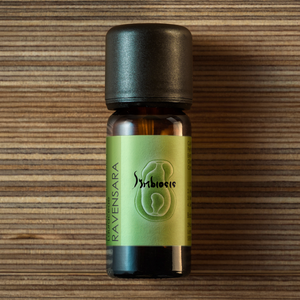



Myrrh | Commiphora myrrh 10mL
£18.00
Size: 10mL
Country of origin: SOMALIA
Botanical family: BURSERACEAE
Extracted from: RESIN
Extration method: STEAM DISTILLATION
Note: BASE
Blends well with:
Frankincense: Lifts the dark resinous base toward something with more vertical quality and cool dryness, the two ancient resins meeting at their shared balsamic territory while remaining in entirely different registers of it. A room used for sitting with what is difficult. → Restoration
Cedarwood: Warms the dark base into something with more horizontal weight, the cedar's creaminess softening the bitterness slightly without dissolving it, the blend suited to a study or a library where time is being honored. → Storage
Vetiver: Deepens the earthen quality of the dry-down into something older and more grounded, the two oils sharing a quality of compressed time that the blend intensifies rather than moderates. → Storage
Clary Sage: Warms the bitter darkness into something more musky and bodily, the sclareol base of clary sage meeting myrrh's lindestrene in the same register of animalic warmth, the blend moving the room toward the intimate rather than the ceremonial. → Intimacy
Rose Otto: Lifts the darkness with a warm honeyed floral quality that is the only register soft enough to survive alongside myrrh's weight, the two oils creating a blend that holds both grief and beauty in the same space. → Intimacy
Shelf life: Keep in a cool, dark place in a tightly sealed amber or black bottle. 4 to 6 years. The resinous base deepens and becomes more complex over time; an older myrrh may be richer than a fresh one.
Precautions: Dilute before skin application. Avoid during pregnancy and while breastfeeding. Not for internal use.
The opening is warm and balsamic, the resinous depth arriving fully rather than building, a medicinal edge present from the first moment but not sharp, more like the smell of something preserved than something applied. A faint sweetness runs underneath, barely perceptible, closer to dark chocolate at its most cacao-bitter than to anything honeyed. As the heart develops, the dusty complexity deepens: old leather, dark wood, a quality of something that has been absorbing the warmth of a room for centuries and releasing it slowly. The dry-down is the darkest register in the range, the bitterness complete, the animalic warmth of the lindestrene base giving the scent a quality of compressed time rather than of simple age. Frankincense takes the resinous family and stays cool, dry, and vertical; myrrh takes the same family and descends into a warmth that has nothing light or spare in it. Where frankincense makes a room feel measured, myrrh makes it feel weighted, and the difference is not of degree but of direction.
Myrrh is the person who stays. Not productively, not with solutions, not with the implicit pressure of someone who needs the grief to progress toward resolution so they can feel they have helped. They stay because endings deserve witnesses, because the weight of what is being carried is real and pretending otherwise is a specific unkindness. They have sat with their own darkness long enough to stop fearing it in others. When someone is in the middle of something that cannot be fixed, they do not say anything helpful; they bring food you do not have to eat and sit without needing the silence to end. You leave their company feeling more honestly located in the weight of what you are carrying, and less alone in carrying it, which is a different thing from feeling better.
Colour:
The colour is deep amber-brown bleeding into burgundy at the edges and toward black in the shadows: the palette of things that have been exposed to smoke and candlelight for so long that their original colour is no longer the primary quality, only the darkness they have accumulated. There is a very distant gold in the heart, old rather than bright, the gold of an icon seen through smoke rather than in clean light, present as a memory of warmth rather than as warmth itself. The dry-down resolves into something closer to black than brown, the bitterness of the scent having consumed whatever lightness remained.
Texture:
In the air it has the density of resin before it has fully hardened: not liquid, not solid, with a quality of weight that registers in the chest rather than at the surface of the nose. The medicinal opening has a slight astringency, the texture of something drying rather than fresh, and then the heart deepens into something denser, the way old leather feels under the hand, warm and slightly resistant. The dry-down has the texture of compressed earth, the quality of substance that has been pressed by time into something more concentrated than its original form.
Architecture:
The plan is carved rather than built: walls of solid stone with no structural ambition beyond containment, the apertures small and deeply recessed, the light entering as narrow columns rather than as illumination. The ceiling is low relative to the density of the walls, the volume compressed rather than generous, the mass of the stone making the interior air a different substance from the air outside. The floor is worn smooth at the centre of the most-used path, the stone carrying the evidence of many generations of the same movement. The body enters through a low threshold, bows to pass, stands in the changed air, does not move quickly. The acoustic is stone and absorbed sound, the room making silence feel inhabited rather than empty. Myrrh runs as a dark resinous charge through the full volume of this space, a current so embedded in the stone and the timber and the ancient textiles that it is no longer a scent the room contains but a property of the room itself, as structural as the walls.
Interior:
Icons darkened by smoke until the features are barely visible but somehow more present for the obscuring, the gold of their backgrounds surviving the smoke as a warm gleam rather than a brightness. Stone surfaces at the altar, stained by oil and wax applied in the same places for generations, the patina not of use but of devotion, which is a different kind of accumulation. Ancient textile at the threshold, its original colour gone, its current colour the colour of everything the room has been burning. The hand rests on the stone, feels the coolness beneath the warmth the room holds, the temperature differential between surface and air smaller than in a less inhabited space. Nothing here is placed for appearance; everything has been in the same position for longer than living memory. The scent gives the space its quality of compressed time, the dark resinous weight along every surface that makes the distance between past and present feel permeable rather than absolute.
Sound:
The clink of a censer chain as it is set in motion, and then the sustained swing of it through the air: a metallic sound that resolves into the crackle of resin on hot coals, and then the smell arrives as a physical event a moment after the sound. Deep resonant tones in a stone room, felt in the chest before they are heard by the ear. Where frankincense is the bell that has already rung and is still ringing, myrrh is the censer in motion: heavier, lower, the sound of something swung with intention rather than struck once and released.
Storage:
Myrrh in a room where significant things are kept, where memory is stored alongside objects, where the past is present in the physical evidence of what has been lived: in these spaces the scent gives the keeping a quality of genuine seriousness. What is stored here is stored because it carries weight, because it marks something that cannot be unmarked, because the act of preserving it is an act of honoring what it represents. This is not the organisational version of Storage; it is the version that acknowledges that some things are kept because setting them down would mean a loss that the room is not willing to participate in.
Restoration:
Myrrh's restoration does not return anything to what it was before. The room with this scent in it makes no promise of recovery in the sense of the wound closing. What it offers instead is the quality of being adequate to the weight of what is being carried: a space that does not require the grief or the difficulty to be managed or moderated or moved toward resolution before its time. The restoration is of dignity in difficulty, the felt sense that the room can hold what the person in it is holding without either of them needing to pretend it is smaller than it is.
Remarks: The information provided on this website is for educational purposes only and may not be entirely accurate or complete. It is not intended to diagnose, treat, cure, or prevent any disease. Please note that the photos of the plants are intended to represent the typical appearance of each plant, but may vary based on location, growing conditions, and time of year. We recommend consulting with a healthcare professional before using any essential oils if you are pregnant or breastfeeding, or have any underlying health issues.