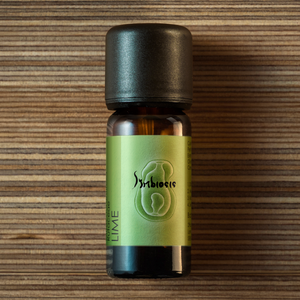


Lemongrass | Cymbopogon citratus 10mL
£8.00
Size: 10mL
Country of origin: INDIA
Botanical family: POACEAE
Extracted from: LEAVES
Extration method: STEAM DISTILLATION
Note: TOP
Blends well with:
Ginger: Warms the green-citrus brightness into something with more body and forward momentum, the two oils meeting at their shared quality of directional, building energy. A kitchen or workspace in the morning. → Productivity
Eucalyptus Radiata: Amplifies the clarifying quality, the cineole adding an airway-opening brightness that aligns with lemongrass's citral to produce a blend that clears a room decisively. → Stimulation
Citronella: Sharpens the green-citrus register while the citronella's geraniol introduces a faint rosy quality that gives the blend slightly more complexity than lemongrass alone carries. An outdoor-adjacent space in summer. → Storage
Peppermint: Cools the sharp green brightness into something more directional, the menthol adding a cold edge that extends the blend's clarifying quality while reducing the soapy-aldehydic quality that some find harsh. → Stimulation
Frankincense: Grounds the volatile intensity into something with structural weight, the resinous dry quality of the frankincense giving the blend a base that lemongrass entirely lacks, making the combination suited to a workspace that needs both sharpness and stillness. → Productivity
Shelf life: Keep in a cool, dark place in a tightly sealed amber or black bottle. Best used within 2 to 3 years.
Precautions: Dilute before skin application; use at 0.7 percent maximum due to the high citral content, which is a significant sensitiser. Avoid during pregnancy and while breastfeeding. Patch test strongly recommended before any skin application. Not for internal use.
The opening is piercing before it is fresh: citral at high concentration, green and cutting, the stalky quality of lemongrass stem rather than the fruit it evokes. There is no moment of gentleness at the start; the intensity arrives complete. As the heart develops, geraniol brings a faint rosy softness, briefly, before the soapy-aldehydic quality enters and the earthy undertones of myrcene deepen the green into something with more body. The dry-down retains the citral character longer than lemon does, the green-citrus quality persisting rather than clearing. Lemon shares the citral family but carries it at a concentration that allows transparency and brevity; lemongrass takes the same chemistry and concentrates it until accommodation is no longer an option. Citronella shares the family but its citronellal base takes it toward rosy-floral; lemongrass stays in the green and offers nothing equivalent.
Lemongrass is the person who believes that clarity is a form of kindness even when it does not feel like one in the moment. They have no patience for circling: if something needs addressing, they address it; if something needs saying, they say it. There is no unkindness in the directness, only the absence of the softening that would make the truth slightly less accurate. They are the friend who tells you to stop circling the decision and make it, who has limited sympathy for problems that are being maintained rather than solved, who genuinely believes that most difficulty comes from avoiding the obvious next step rather than from the step itself. You leave their company feeling either energised by the clarity or faintly bruised by the absence of cushioning, depending on what you came looking for.
Color:
The colour is bright yellow-green at the intensity of harsh tropical sunlight: not the soft celadon of geranium or the dusty sage of clary sage, but a saturated, almost aggressive yellow-green that does not recede. There is no grey in it, no softening toward blue; the palette is committed to brightness in the way that a scent this concentrated is committed to its own character. The soapy heart introduces a very brief white, clean and aldehydic, before the green reasserts itself in the dry-down.
Texture:
In the air it has the slight sting of a grass blade drawn quickly across the skin: not painful, but registering, a sharpness at the surface that is specific rather than general. The citral concentration adds a quality of penetration, the scent moving through the air with more pressure than most oils carry. The soapy-aldehydic quality in the heart adds a slickness, the texture of something that has been cleaned rather than something that is cleaning, before the green stalky quality reasserts itself in the dry-down.
Architecture:
The plan is open on multiple sides: no walls where walls are not structurally required, the roof a cover rather than an enclosure, the sides open to the movement of hot air through the space. The floor is raised slightly from the ground, the structure positioned for drainage and airflow rather than for view or orientation. Materials are chosen for thermal resistance and ease of cleaning: corrugated metal or tile above, concrete or tile below, nothing that absorbs moisture or traps heat. The body moves through the space without encountering thresholds; the boundary between inside and outside is the roof line rather than a wall. Lemongrass runs as a sharp green current through the full cross-section of this open space, the scent the plan holds at the level of the preparation surfaces where the stems are cut and the oils release, a line the air carries laterally out through the open sides and across whatever is adjacent.
Interiors:
Stainless steel or pale tile surfaces that show everything and require regular wiping, the worktop carrying the stain of citrus acid and the slight abrasion of daily use without accumulating the patina that softer materials develop. Bundles of lemongrass stalks, their cut ends releasing oil into the air, stacked near the prep area rather than stored away. A large knife on a magnetic strip, the blade visible. The hand reaches for a stalk, crushes it once with the flat of the knife, the oils releasing immediately. Nothing in this interior is placed for effect; the placement of every object reflects the sequence of the work. The scent gives the space its quality of activated readiness, the sharp green current that rises from the cut stalks at the prep surface and occupies the open air above it, making the work feel already underway.
Sound:
The rapid, rhythmic chop of a heavy knife through lemongrass stalks on a hard surface: not a single clean strike like lemon's knife cut, but a series of them, fast and repetitive, the sound of work that has a pace and maintains it. The acoustic is hard and live, metal and tile and open air, the sound travelling further than an enclosed room would allow. Where fennel sweet is the irregular simmer of a pot being maintained, lemongrass is the knife moving through the prep work, constant and efficient, already halfway through before you have registered it has begun.
Stimulation:
Lemongrass does not raise alertness gradually. The citral concentration makes itself known immediately, the sharpness registering in the sinuses as a demand rather than an invitation. In a kitchen where cooking is vigorous, a workspace where complacency has accumulated, or an entrance hall that needs to establish the register of the space before anything else does, the scent creates the quality of a room that is already operating at intensity and expects the person in it to match it. This is Stimulation as an environmental condition rather than a personal state: the room sets the pace.
Productivity:
Lemongrass in a workspace cuts through the specific fog that comes from being in the same room for too long, when the air has thickened and the familiar has become invisible. The intensity of the citral does not allow the senses to habituate quickly; the room continues to register as sharp and present for longer than a softer scent would. The result is not inspiration but sustained attention, the quality of a space that keeps the body alert to what it is doing rather than allowing the work to proceed on autopilot.
Remarks: The information provided on this website is for educational purposes only and may not be entirely accurate or complete. It is not intended to diagnose, treat, cure, or prevent any disease. Please note that the photos of the plants are intended to represent the typical appearance of each plant, but may vary based on location, growing conditions, and time of year. We recommend consulting with a healthcare professional before using any essential oils if you are pregnant or breastfeeding, or have any underlying health issues.